
Dispatch #49 - Soldier Meadows Road, Nevada
Wandered across the Great Basin last week. On breathing room, darkness, and the spaces between things.

I roamed around northern Nevada last week, searching for the only self-sustaining lake population of Lahontan Cutthroat Trout (more on that in the coming months). Also on the docket was the Black Rock Desert. What follows is a short story from the third night of the trip as I drove north toward along State Route 447 and then white knuckled it along Soldier Meadows Road in the dark of night.
Suddenly the lake appears. Pyramid Lake. Kooyooe Panunadu to the Northern Paiute, the largest remnant of Lake Lahontan, which covered most of Northern Nevada 12,500 years ago. A geological millisecond ago in the timeline we find ourselves in.
Anaho Island is perfectly lit by a falling sun. 6:58pm. I stop the car right on the road, step out, place my camera on a tripod and take a few photos.
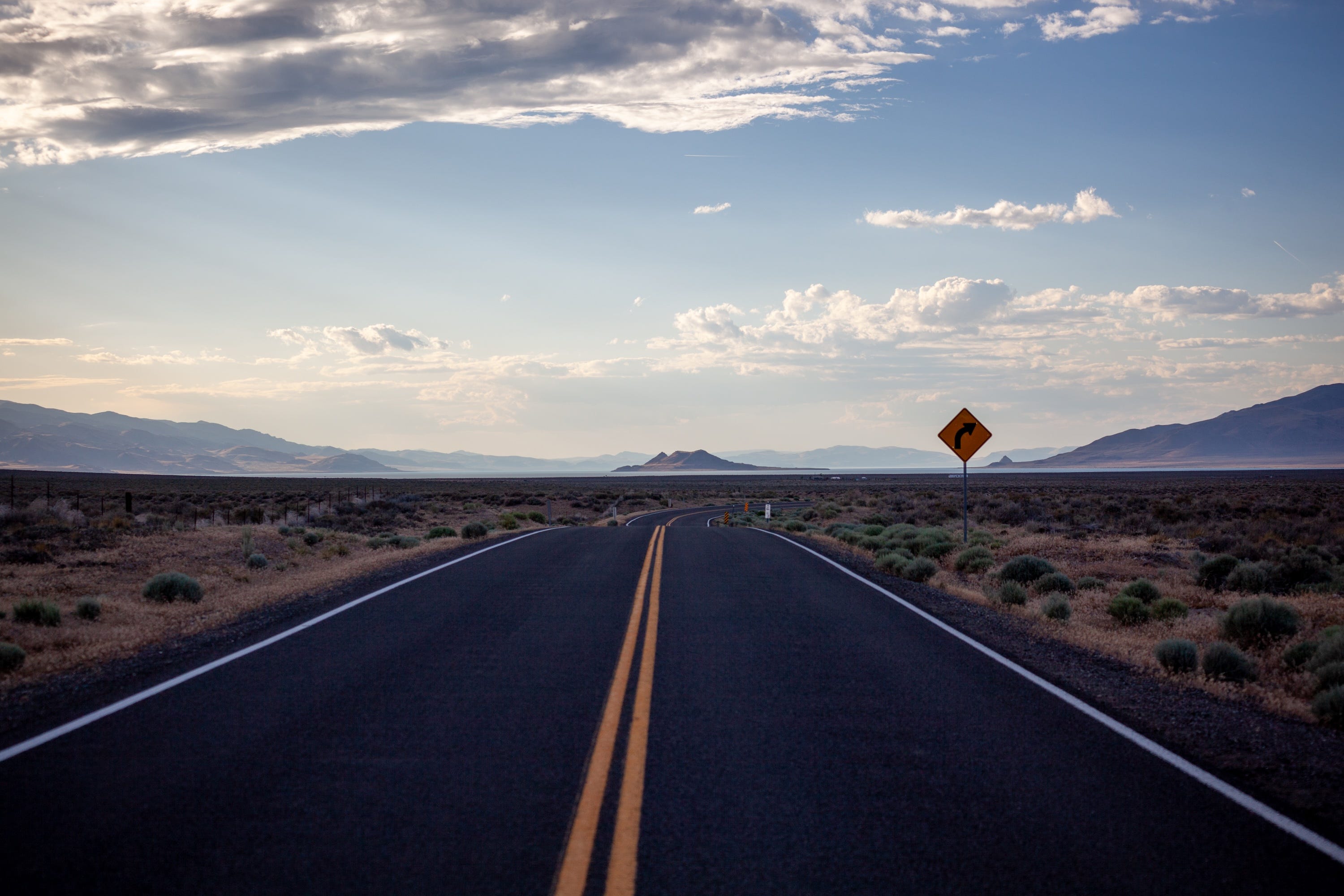
7:41 p.m. A few miles before Gerlach, a pair of pronghorn stand just beyond the shadow. Male and female.
Though I encounter them on nearly every trip to the Great Basin, their presence still gives me pause. They are the second-fastest land animal on Earth, still carrying the speed and endurance that evolved to outrun American cheetahs and other Ice Age predators. Unlike cheetahs, however, they can sustain those speeds over long distances — the marathoners of the animal world. Every encounter feels a little improbable, as if a fragment of the Pleistocene has wandered into the present.
Stop, tripod, camera, the whole routine again.
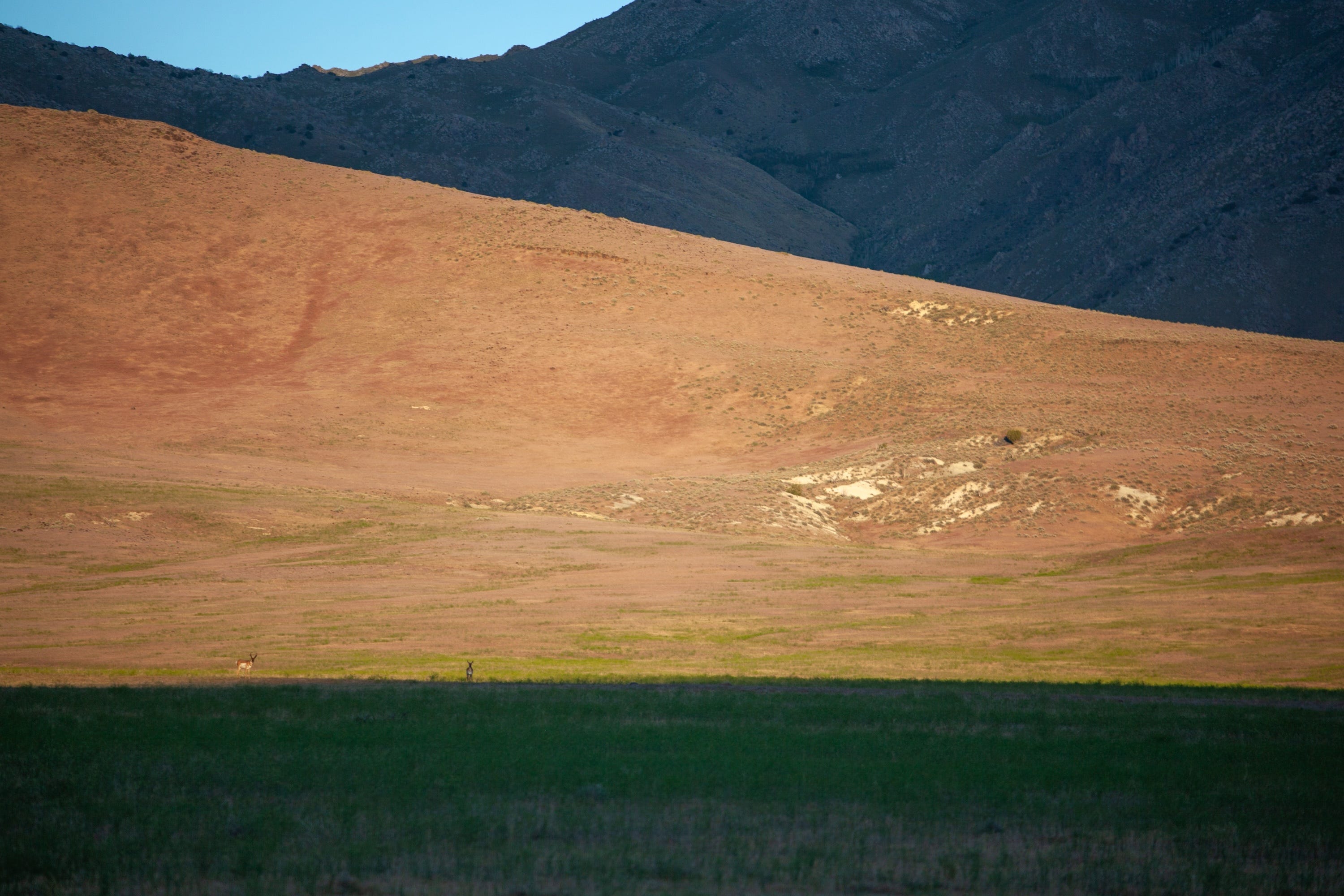
It should be noted here that in the 79 miles between Fernley and Gerlach, I did not pass a single car. On a holiday weekend.
Richard Nixon once called our public lands the “breathing space of the nation.” Out here, I understand where he was coming from.
The land exhales. Inhales. Humans are notably absent almost everywhere I go.
How do we carry the weight of environmental degradation, corporate hijacking of our public lands, and narrowing protections for our brethren in the animal and plant kingdoms … alongside the solitude and space of places like the Great Basin?
I spend part of every weekday reading about these threats and wrapping my head around the details. From time to time, I even see them on the land. But when I walk for miles across the sagebrush sea, I don’t feel them.
For more than a decade, I’ve struggled with how to write from within this paradox. Should these lands be sung as hymns, love letters to sagebrush and silence? Or should they be sounded as alarms, warnings against the forces that would commodify, scar, and sell them?
I don’t know. My next book will live somewhere in between.
8:18 p.m. I turn onto Soldier Meadow Road. I made a deal with myself long ago to never drive on an unknown road into an unknown landscape at night. I debate whether to pitch camp at a turnout, then throw caution to the wind. It’s 46.7 miles to my destination. I reset the odometer on my trusty 2009 Highlander — 218,607 miles and counting — as a precaution against getting lost.
Small rocks puncturing through the surface greet my tires with an unwelcome hello. The road is made up of a lethal concoction of finely packed silt, clay minerals, quartz dust, and volcanic rocks, all of which creates conditions for some very slow driving.
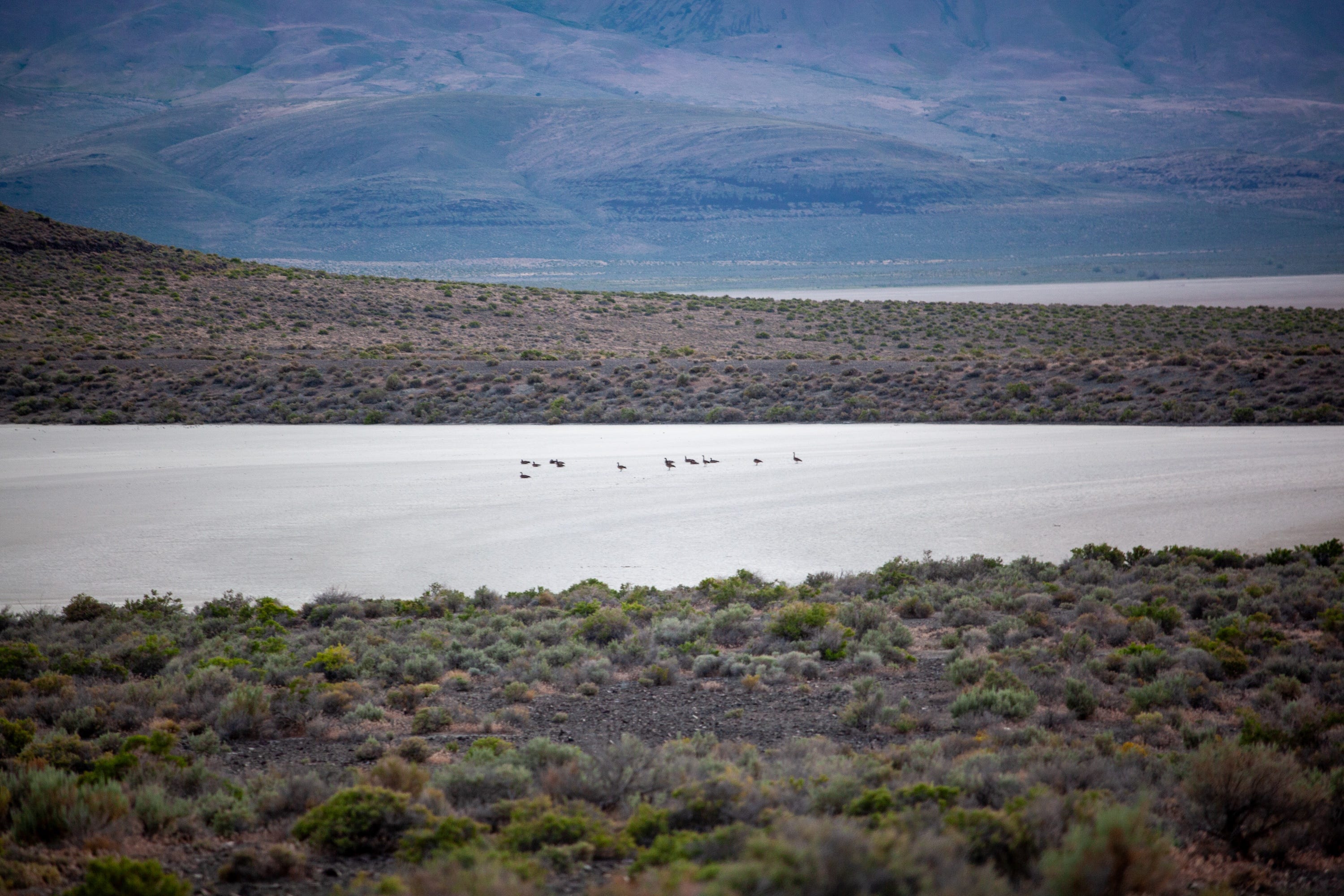
8:26 p.m. A flock of fifteen geese idles on a salty dry lake, as if confused by the lack of water.
Average speed is currently 11 miles per hour, which puts me reaching my destination in roughly four hours and fifteen minutes.
The sun has fallen off the horizon, but a jet’s contrails are still lit, painting the sky in a flash of glowing orange.
Over the speakers, Robin Wall Kimmerer keeps me company, her voice like a soothing lullaby.
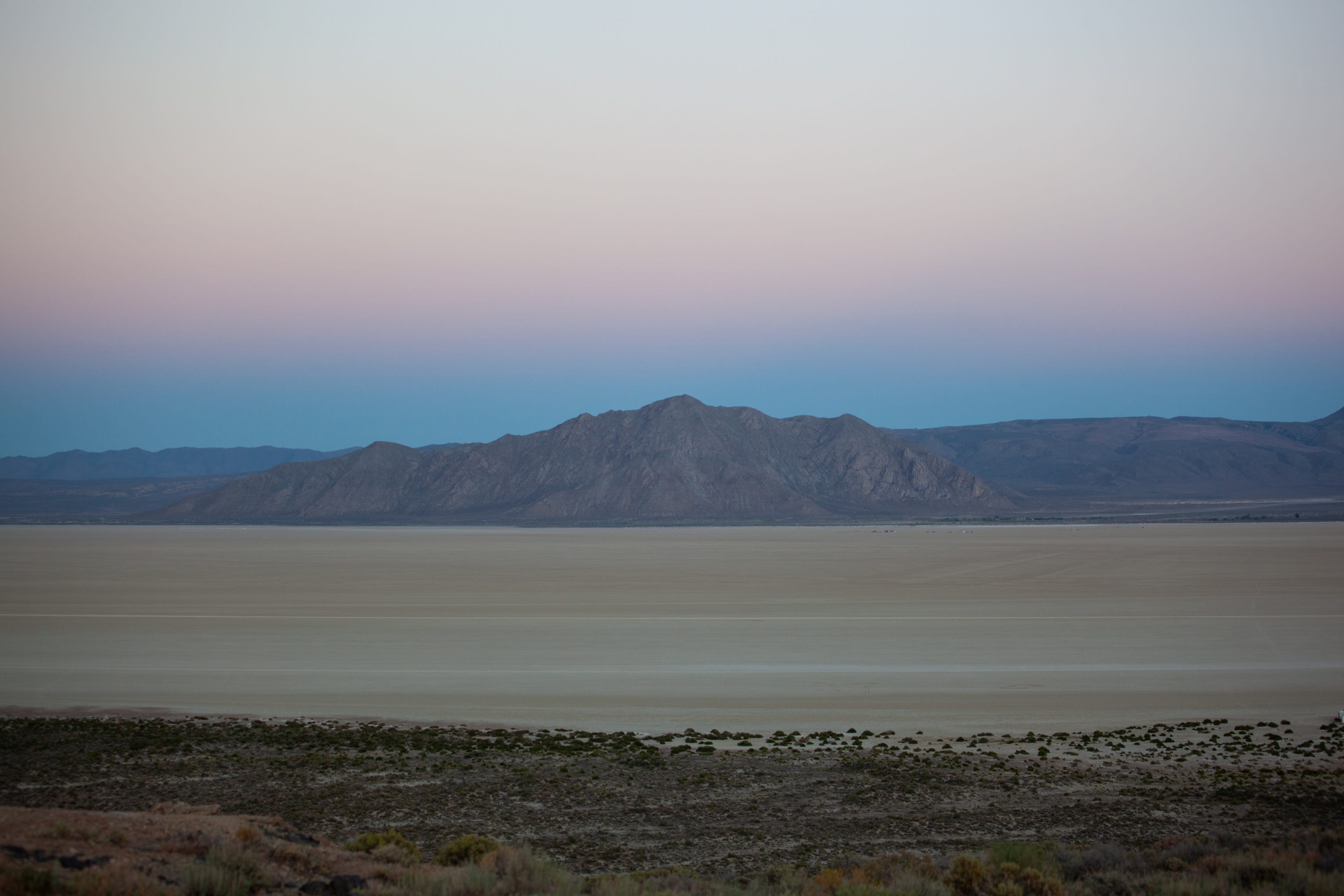
Ever present to the east is the famous Black Rock Playa, where every August a Burning Man is set alight in flames. Tonight, though, only a few RVs and a van or two. As darkness settles over the basin, artificial lights flicker on across the playa while celestial lights emerge overhead, each appearing one by one in the gathering dark. Winnebago, Venus, van, Jupiter. Every so often a pair of headlights streaks across the open playa like a shooting star, appearing suddenly before dissolving back into the night.
Headlights on high beam. Dodging potholes. Accelerating over washboard straights. Hoping my highway tires survive the night. The firewood crate in the back sounds like a snare drum. Water sloshes in a five-gallon container.
Thirteen-ish miles in, the protruding rocks give way to clay and suddenly I’m driving 40 miles an hour and it feels like a hundred. My hands tighten around the wheel.
Loose curves appear out of nowhere while Kimmerer waxes poetically about reciprocity. As I fishtail through the bends, she remarks that “nature herself is a moving target.”
Blessed Kimmerer and I are in sync.
I roll down all the windows on a straightaway and switch off the headlights.
One second.
Two seconds.
Three seconds.
Back on.
Yeeeehhhaaaawwww, I scream into the night.
9:24 p.m.
In case you’ve never been to the Silver State, here’s something you should know:
The sheer number of insects is staggering. It reminds me of the bugs hitting my 1988 Volkswagen Jetta on summer nights in Michigan back in the late 1990s.
The windshield is a bloodbath. Eventually I run out of washer fluid and surrender to the accumulating splats, each one a little further obstruction to my view.
A few miles later, black specks begin appearing on the road, then increase in density until half the pavement is covered, like a busy anthill. I come to a stop, open the door, and find a two-inch-long Mormon cricket sitting there, dark red and armored, its antennae waving in the air like radio wires.
There appear to be millions of them marching across the road to the west, a living river flowing through the shadscale. Scientists believe these migrations are driven in part by cannibalism. Individuals that slow down risk being consumed by those behind them. Watching them stream across the basin, it’s hard not to feel as though the landscape itself has begun to move.
I wonder: how fast they’d overtake me if I laid down across the road?
Jackrabbits dart through the darkness. Kangaroo rats flash through the headlights. Somehow I manage to dodge the mammals while my windshield and tires carry the splatter of insects.
10:29 p.m. Arrival.
I pry my hands off the wheel to find them frozen in a curled-up position after two hours and eleven minutes of sensory overload.
Campfire.
Bedtime.
5:52 a.m.
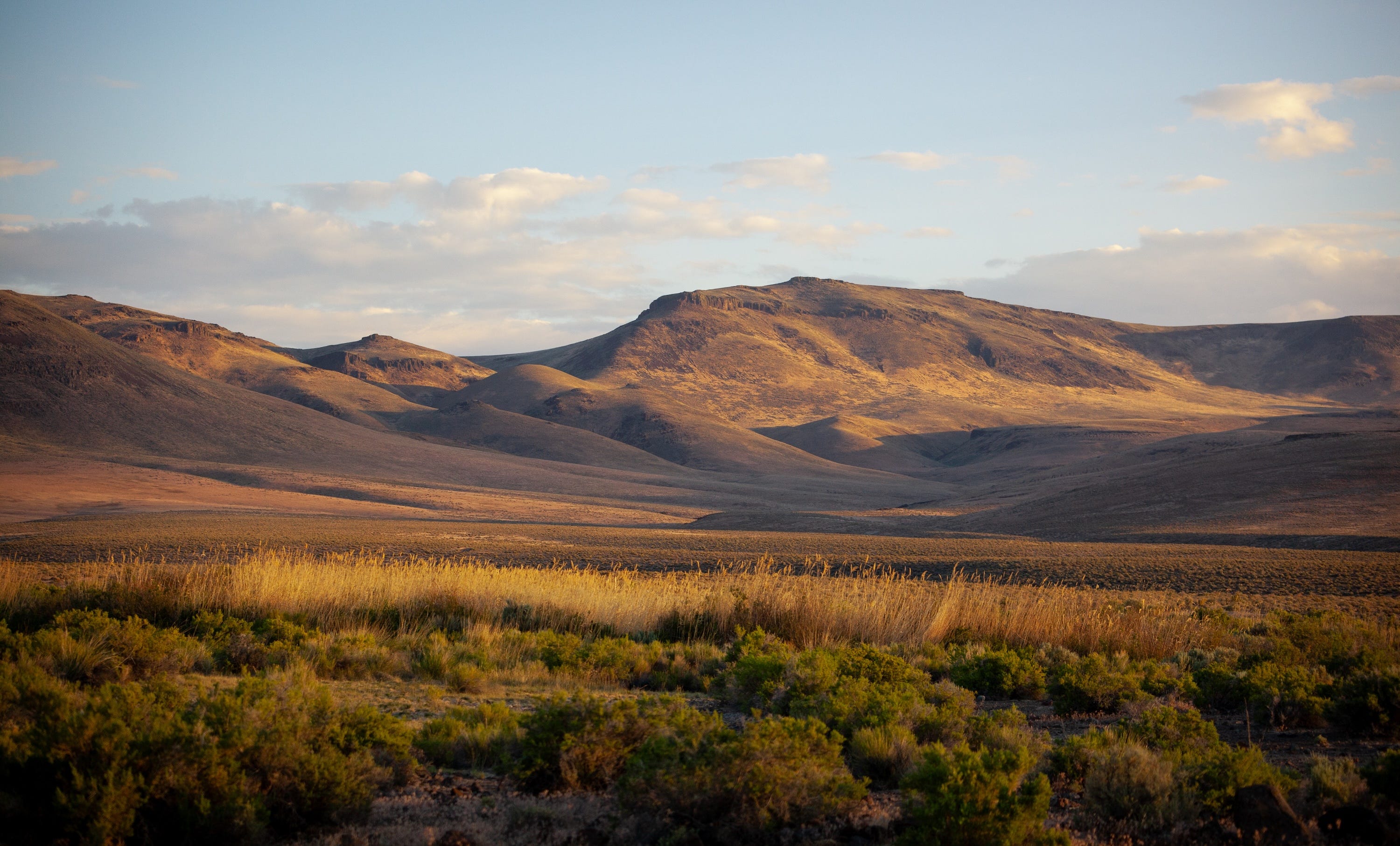
One of the small joys of arriving somewhere new after dark is waking up inside a landscape you’ve never seen before…
⬇︎
Another nice Sunday reading. I started in the morning and then got interrupted, but what a nice finish! I need to finish up my own newsletter now ...
magical ride. I'll bet if you sent that magnificent description of your trip to Mark Amodei, our current GOP nabob in Congress, he wouldn't know what the heck you were talking about. I really enjoyed reading this piece, Josh, crickets and all.